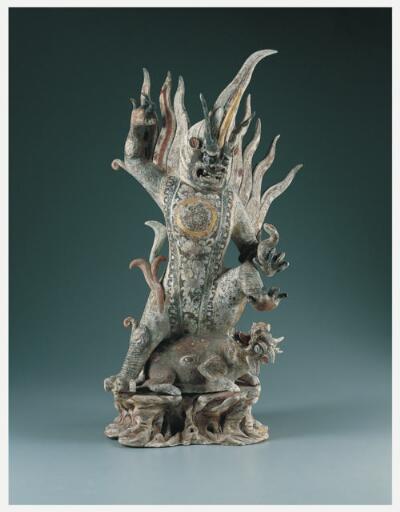
Earth Spirit, first half of the 8th century A.D.
Chinese
The inclusion of fantastic animal guardians as part of the retinue of tomb figures began in the Northern Wei dynasty (A.D. 386–534) and continued into the Tang dynasty. Also called earth spirits, or zhenmushou (grave-quelling beasts), these guardians took the form of fantastic hybrid creatures composed of various animal and sometimes human elements and were placed in the tomb in pairs to ward off any malevolent beings who threatened to intrude.
The Kimbell’s fierce figure of an earth spirit stands in a rampant posture of conquest as it subdues a snarling beast upon a rockwork base, its left arm entwined with a serpent. The spirit’s triple horns, bulging eyes, and bare-teethed grimace add to its ferocious appearance. Black stripes on the forearms and forelegs terminate in sharply clawed hands and feet, and undulating flames emerge from its head, shoulders, and right leg. A gilded tondo, finely painted with a group of figures (possibly musicians, who may also be foreigners), set against a luxuriant floral panel, embellishes the figure’s chest. The composite elements of the earth spirit, such as the large horns, claws, fangs, and tiger stripes, presumably conferred upon it the fearsome qualities of these animals. The evil that the earth spirit is quelling is in the form of the horned, hoofed beast that he tramples underfoot. The eye on the side of the beast’s belly may represent the “third eye,” an indication of the influence of Esoteric Buddhism prevalent during the early Tang period.
La inclusión de animales guardianes fantásticos como parte del séquito de las figuras funerarias se inició en la dinastía Wei del Norte (386–534 d. C.) y continuó hasta la dinastía Tang. También llamados espíritus terrenales, o zhenmushou (bestias que dominan las tumbas), estos guardianes adoptaban la formas de fantásticas criaturas híbridas compuestas de varios animales y, a veces, elementos humanos; se colocaban en las tumbas de a pares para alejar a cualquier ser malévolo que amenazase con importunar.
La feroz figura del espíritu terrenal del Kimbell adopta una pose desenfrenada de conquista mientras somete a una bestia que gruñe sobre una base rocosa, con una serpiente enroscada en el brazo izquierdo. El feroz aspecto del espíritu se ve reforzado por la triple cornamenta, los ojos saltones y la mueca que deja sus dientes a la vista. Las rayas negras de sus antebrazos y patas delanteras terminan en afiladas garras en manos y pies, mientras su cabeza, hombros y pierna derecha desprenden llamaradas ondulantes. Un tondo dorado, pintado con delicadeza junto a un grupo de figuras (que posiblemente también sean extranjeras), dispuesto sobre un lujoso panel floral, embellece el pecho de la figura. Es posible que la combinación de elementos del espíritu terrenal, como los grandes cuernos, las garras, los colmillos y las rayas de tigre le confiriesen las aterradoras cualidades de estos animales. El mal que el espíritu terrenal está pisoteando adopta la forma de una bestia con cuernos y pezuñas. El ojo que la bestia tiene a un lado de su cuerpo podría representar el “tercer ojo”, indicio de la influencia del budismo esotérico extendida durante los primeros años de la dinastía Tang.
(Eskenazi, Ltd., London);
purchased by Kimbell Art Foundation, Fort Worth, 2001.